Buying A2P SMS looks simple until the first campaign goes out and half of it disappears. The API returned success, the balance went down, and the recipients never saw anything. Nothing broke — you just bought the wrong route.
This article explains what an SMS route actually is, why the same message costs $0.006 on one path and $0.045 on another, and how to choose between them without guessing.
What a route really is
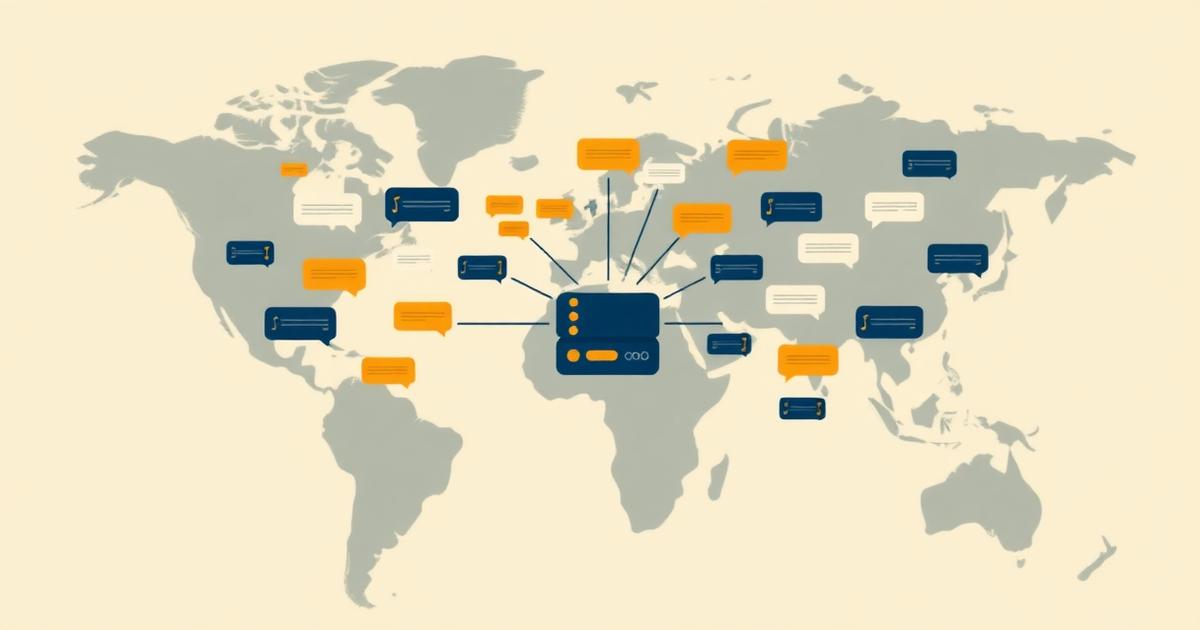
A message you submit does not travel directly to the handset. It passes through a chain: your account, our platform, an upstream carrier, an interconnect, and finally the destination mobile network operator (MNO). A route is a specific version of that chain.
Two routes to the same country can differ in:
- Who terminates the traffic. A direct interconnect with the MNO, or an aggregator that resells someone else's interconnect.
- What the network allows through. Alphanumeric sender IDs, long URLs, non-Latin characters, and marketing content are treated differently per path.
- How honest the delivery report is. Some paths return "delivered" the moment the SMSC accepts the message, not when the handset does.
- Throughput. How many messages per second the path sustains before it starts queueing.
Price is the visible variable. Delivery is the one that decides whether the campaign worked.
The three tiers we sell
We group everything we buy into three tiers so you never have to learn carrier codes.
Voxio Direct
Direct operator connections. Shortest chain, fewest hops, the best delivery ratio and the lowest latency we can buy. Sender ID is preserved wherever the destination country permits it, and delivery receipts reflect real handset delivery.
Use it for anything time-sensitive or revenue-critical: one-time passwords, login codes, password resets, fraud alerts, delivery notifications, appointment reminders.
Country Channels
Per-country channels tuned for one destination. They sit between direct and pooled: good, consistent delivery into a single market at a price that makes steady in-country volume viable.
Use them when most of your traffic goes to one or two countries and you want a stable, predictable cost per message rather than the absolute fastest path.
Voxio Pools
Cost-optimised pooled routes. Traffic shares capacity across a broader set of upstreams, which is what makes them cheap. Delivery is good but not guaranteed to be instant, and sender ID support is more limited.
Use them for bulk notifications, reactivation campaigns and marketing where a few seconds of extra latency costs you nothing.
Choosing per campaign, not per account
The most common mistake is picking one route and using it for everything. It is either too expensive for your marketing or too weak for your OTPs.
A workable rule:
| Traffic type | Tier | Why |
|---|
| OTP / 2FA | Voxio Direct | A code that arrives in 40 seconds is a failed login |
| Transactional alerts | Voxio Direct or Country Channel | Reliability matters, latency slightly less |
| Steady in-country volume | Country Channel | Best cost per delivered message in one market |
| Marketing / reactivation | Voxio Pool | Volume economics win |
In the portal you can leave routing on Automatic, which selects a sensible path per destination, or pin a specific route for a given send. Both options are one dropdown away on the same screen.
Segments: the hidden multiplier
SMS is billed per segment, not per message. A GSM-7 message fits 160 characters in one segment; concatenated messages drop to 153 characters per segment because of the header. The moment you include a single non-Latin character — an emoji, a Cyrillic letter, a curly quote pasted from a document — the encoding switches to UCS-2 and the limit collapses to 70 characters, then 67 per segment.
That is not a rounding error. A 165-character message with one emoji costs three segments instead of one: a 3x price increase from a character nobody reads.
Practical hygiene:
- Type quotes and dashes manually instead of pasting from word processors.
- Shorten links; a long tracking URL can be a third of your budget.
- Preview the character count before sending — the portal shows it live.
Reading delivery reports properly
Four states matter:
- Sent — accepted by the upstream, in flight.
- Delivered — the handset acknowledged receipt.
- Undelivered — the network gave up: phone off for the full retry window, out of coverage, number no longer active.
- Failed — rejected before it travelled: invalid number format, blocked content, unsupported sender ID.
Failures cluster. If one country shows 90% failed, the issue is almost always sender ID rules or content filtering in that market, not your code. If failures are scattered across every destination, look at your number list quality first.
We sync statuses back into your message log, so you can filter and export rather than reconciling against a separate provider dashboard.
What we charge
Every price shown in the portal is the price you pay: our cost plus our service fee, already included. Prices are re-checked automatically every 12 hours, so the rate card does not drift away from reality between logins.
Billing is per message from the same wallet that funds your voice termination, DID numbers and OTP activations. Top up once with BTC, ETH, USDT or SOL and everything draws from the same balance. Each message is written to your log with the exact amount debited.
Getting started
- Fund your wallet from the portal.
- Open Send SMS, paste your recipients in international format, and write the message.
- Leave routing on Automatic, or pick the tier that matches the traffic.
- Send, then watch delivery states land in the log.
If you are moving meaningful monthly volume, talk to us on live chat before you migrate — we can quote route-specific pricing rather than the standard rate card.