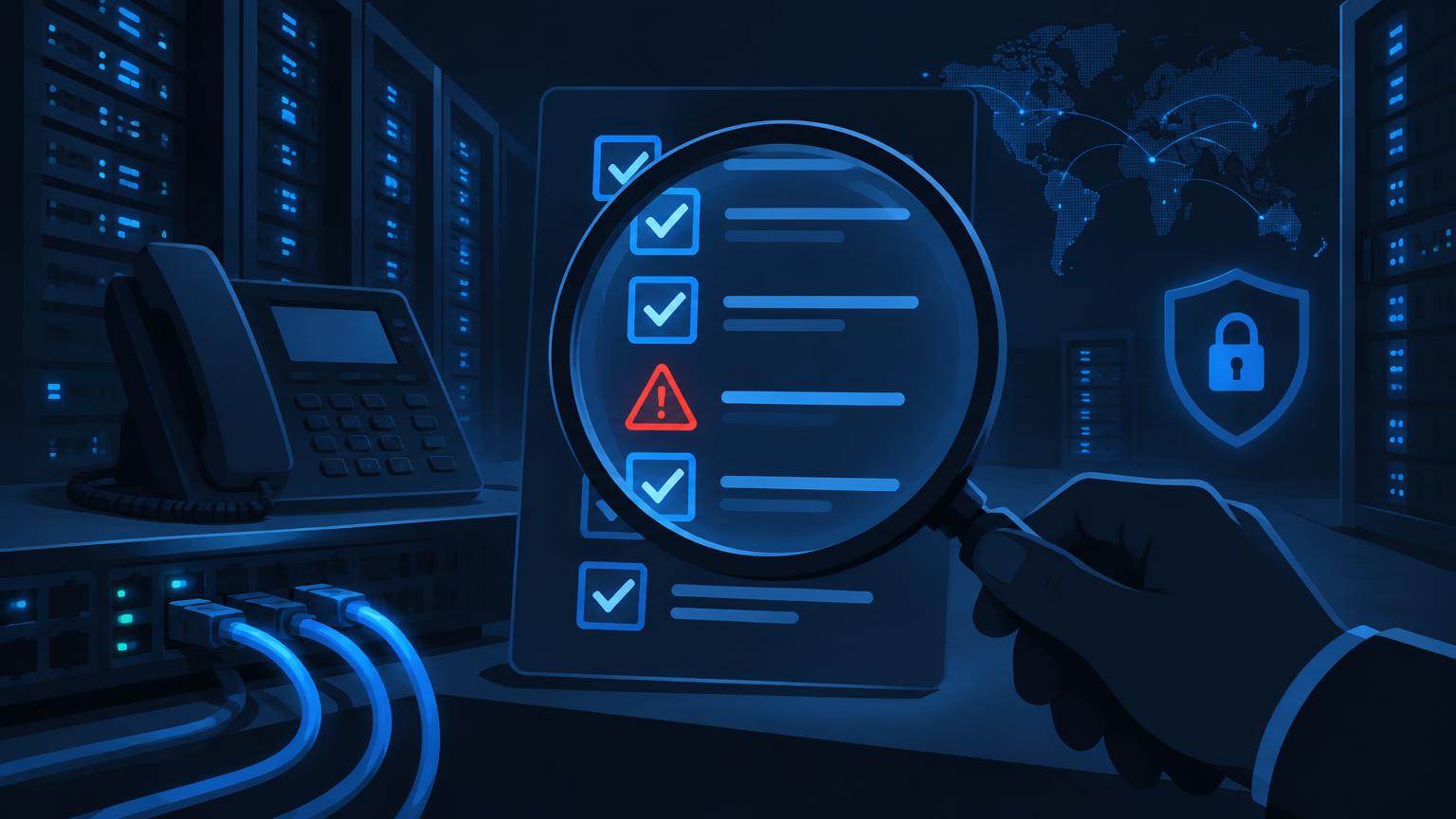
The problem with no-KYC VoIP providers
The no-KYC VoIP market has honest providers and outright scams side by side. Because onboarding is anonymous, a bad actor can take deposits, deliver dead routes and disappear. That does not mean you should avoid no-KYC providers — it means you need a checklist before you send money or traffic.
Here is how to separate a real wholesale carrier from a burner website.
1. Test the routes before you fund big
Any legitimate provider lets you start small. Top up the minimum, get your SIP credentials, and send test calls to your own numbers in the destinations you care about. Measure:
- ASR (answer-seizure ratio) — above 40–50% on decent mobile destinations.
- ACD (average call duration) — very short durations on answered test calls mean FAS (false answer supervision).
- CLI delivery — does your caller ID actually show up? A real Premium CLI route delivers it consistently.
2. Check billing increments
A $0.010/min route with 60/60 billing can cost more than a $0.014/min route with 1/1 billing. Ask explicitly, or check the published rate card. Honest providers publish increments per destination in their coverage and rates.
3. Look at payment handling
- Crypto top-ups should credit automatically after confirmation, not after a manual review queue.
- Partial payments should be credited proportionally, not swallowed.
- A provider that only accepts irreversible payment methods AND has no public rates is a red flag. See how a proper crypto VoIP payment flow works.
4. Test support before you need it
Open a ticket with a technical question — ask about codecs, SIP response codes, or a specific prefix rate. The speed and quality of the answer tells you more than any landing page. If nobody answers within 24 hours, imagine having a route outage.
5. Check the infrastructure signals
- Do they publish their SIP server IPs and support IP authentication, not just registration?
- Is there a status page, an API, a real portal with CDRs?
- Do they offer more than one product (DIDs, SMS, HLR)? Single-page sites selling only "cheap routes" disappear the fastest.
6. Start small, scale on evidence
Even with a provider that passes every check: fund $50–100 first, run traffic for a week, watch the CDRs against your own switch stats, then scale. Legitimate providers expect this — it is how every serious wholesale buyer operates.
Frequently asked questions
Are no-KYC VoIP providers safe to use?
The good ones are. Safety comes from testing routes, starting small and checking billing transparency — not from the onboarding policy itself.
What is the biggest red flag?
No published rates plus manual-only payment crediting. That combination means you cannot verify costs and cannot get money in or out predictably.
How much should I deposit first?
The minimum that lets you test properly — usually $20–$100. Scale only after a week of clean CDRs.
Can a no-KYC provider still have good support?
Yes. Anonymity for customers does not mean the provider itself is anonymous or unresponsive. Test them before committing.