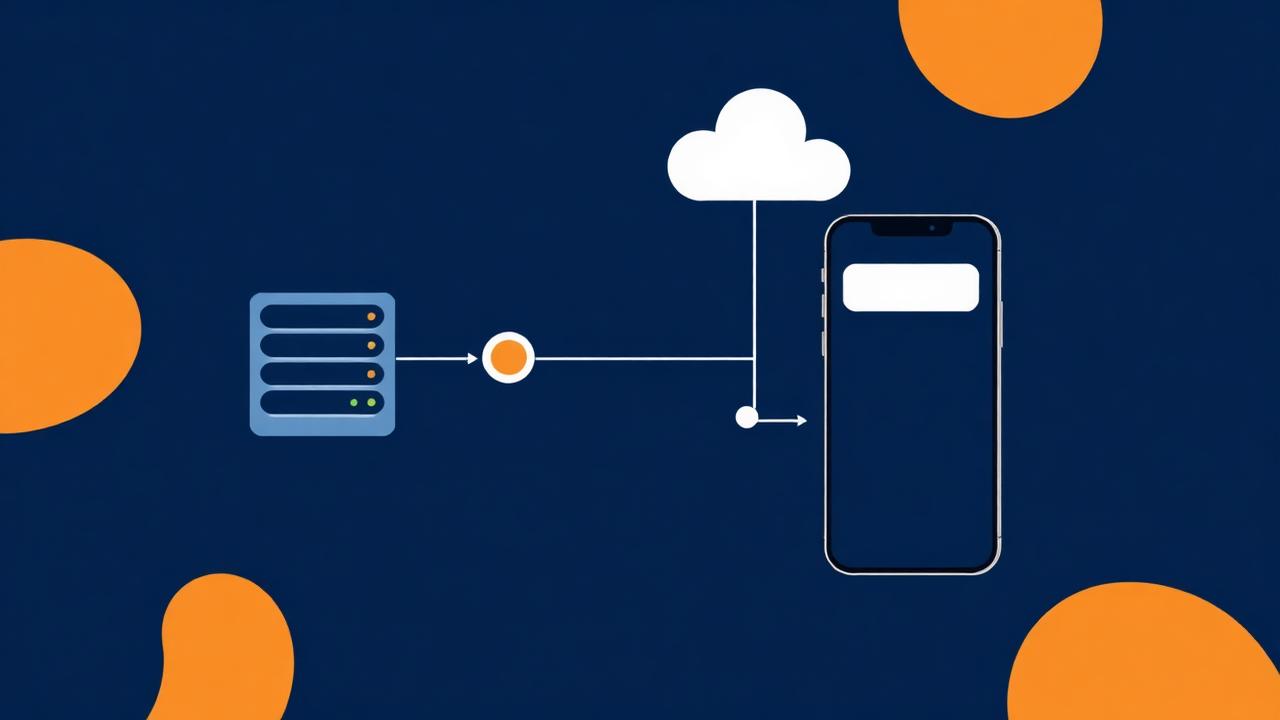
Short answer: A2P stands for application-to-person. It is any message generated by software — an OTP, a delivery notice, a marketing blast — and delivered to a human's mobile phone. The opposite is P2P, person-to-person, the messages you type yourself. Operators treat the two categories differently in pricing, routing, and filtering, which is why A2P traffic sent over a P2P path gets blocked.
A2P vs P2P in one table
| A2P (application-to-person) | P2P (person-to-person) |
|---|
| Sender | Software, CRM, or platform | A human on a handset |
| Sender identity | Alphanumeric sender ID or short/long code | The sender's own MSISDN |
| Volume pattern | Bursty, high volume, one-to-many | Low volume, conversational |
| Reply expected | Usually not | Yes |
| Commercial treatment | Wholesale A2P termination rate | Bundled in a retail plan |
| Filtering | Heavy: registration, content, and sender checks | Light |
There is also P2A — person-to-application — when a subscriber texts a keyword to a short code, and the newer conversational category where two-way A2P chat sits somewhere in between.
What counts as A2P
- One-time passwords and login verification codes.
- Transactional alerts: order confirmations, dispatch notices, appointment reminders, fraud warnings.
- Marketing and promotional campaigns to opted-in lists.
- Internal notifications, on-call paging, and system alarms.
If a machine decided to send it, it is A2P — including messages that look conversational to the recipient.
The A2P SMS call flow, hop by hop
Here is what actually happens between your POST /sms/send and the recipient's lock screen.
- Application → SMS provider. Your system submits the message over an HTTP API or SMPP bind: destination number, sender ID, body, and optionally a delivery-report callback URL.
- Validation and encoding. The provider normalises the destination to E.164, picks the encoding (GSM-7 for plain Latin text, UCS-2 the moment you include an emoji or non-Latin character), and splits long messages into concatenated parts. GSM-7 gives 160 characters per part, 153 when concatenated; UCS-2 gives 70, or 67 concatenated. Every part is billed.
- Routing decision. The provider selects a path to the destination network: a direct operator interconnect, a country-specific channel, or an aggregator route. This is the single biggest determinant of whether the message arrives and whether your sender ID survives.
- Aggregator / SMS hub. The message crosses one or more wholesale hops toward the destination operator. Each hop can rewrite the sender ID or drop the message under filtering rules.
- Destination SMSC. The recipient operator's Short Message Service Centre accepts the message, applies its own A2P filters — sender-ID registration, content rules, spam scoring — and queues it.
- Delivery to the handset. The SMSC pages the subscriber. If the handset is off or out of coverage, the message is stored and retried until the validity period expires.
- Delivery report back. A DLR travels back up the chain:
DELIVERED, UNDELIVERED, EXPIRED, REJECTED. Provider-level DLRs mean accepted for delivery; handset-level DLRs are the ones that count. Some routes fake them — see below.
Where A2P messages die
- Sender-ID registration. Many countries — India, Saudi Arabia, the UAE, and a growing list — require pre-registered sender IDs. An unregistered alphanumeric is replaced with a shared number or the message is dropped outright.
- Grey routes. A2P traffic pushed through a P2P interconnect to avoid the wholesale rate. Cheap, briefly effective, then blocked — often mid-campaign, with fabricated delivery reports masking the failure.
- Content filtering. Shortened URLs from public shorteners, certain keywords, and unsolicited promotional wording get scored as spam.
- Encoding surprises. One curly apostrophe or emoji flips the whole message to UCS-2 and triples your part count.
- Wrong number type. Landline or invalid destinations simply cannot receive SMS.
Our guide on sender ID and delivery rates covers the diagnostic side when a campaign underdelivers, and A2P SMS routes explained breaks down direct routes versus country channels versus pooled routes.
How A2P is priced
A2P is billed per part, per destination network, and rates vary enormously by country — fractions of a cent in some markets, tens of cents in others. Three things to check on any quote:
- Is the price per message or per part? A 200-character message is two parts.
- What route class is it? Direct operator routes cost more and deliver more; pooled routes are cheaper with variable sender-ID behaviour.
- Are DLRs real? Cheap routes with suspiciously perfect delivery reports are the classic warning sign.
Building A2P into your product
If you are sending verification codes, the flow you want is: generate a code, submit it with a reference you can correlate, receive the DLR on your callback URL, and expire the code on a timer. Do not treat API acceptance as delivery. The SMS verification API guide walks through the whole OTP lifecycle, and our REST API documentation documents the send, quote, and message-log endpoints.
FAQ
What does A2P mean in telecom?
Application-to-person: a message generated by an application and delivered to a mobile subscriber, as opposed to P2P messages typed by one person to another.
What is the difference between A2P and P2P SMS?
The sender and the commercial treatment. A2P is machine-originated, uses sender IDs or short codes, carries a wholesale A2P rate, and passes through operator A2P filtering. P2P is handset-originated and lightly filtered.
What is an A2P SMS aggregator?
A wholesale intermediary connecting message senders to many mobile operators through a single interface, so you do not need a direct contract with every network.
Why did my A2P message arrive from a random number instead of my brand name?
The destination network does not allow unregistered alphanumeric sender IDs, or a route in the chain overwrote it. Register the sender ID for that country or use a route that preserves it.
How long can an A2P SMS be?
160 GSM-7 characters in a single part, 153 per part when concatenated. With any UCS-2 character it drops to 70, or 67 per concatenated part.
Is A2P the same as bulk SMS?
Bulk SMS is a subset of A2P — high-volume campaign traffic. A2P also covers low-volume transactional messages like a single OTP.
Next step
See live A2P pricing and coverage on the SMS routes page, or start with OTP verification if verification codes are your use case.