20 August 2026 VoxioTelecom Team
No-KYC VoIP Provider (2026): Anonymous SIP Trunk, Pay in Bitcoin
How a no-KYC VoIP provider works: sign up with an email, top up in crypto, and get SIP trunk credentials in minutes — no documents, no sales call.
How a no-KYC VoIP provider works: sign up with an email, top up in crypto, and get SIP trunk credentials in minutes — no documents, no sales call.
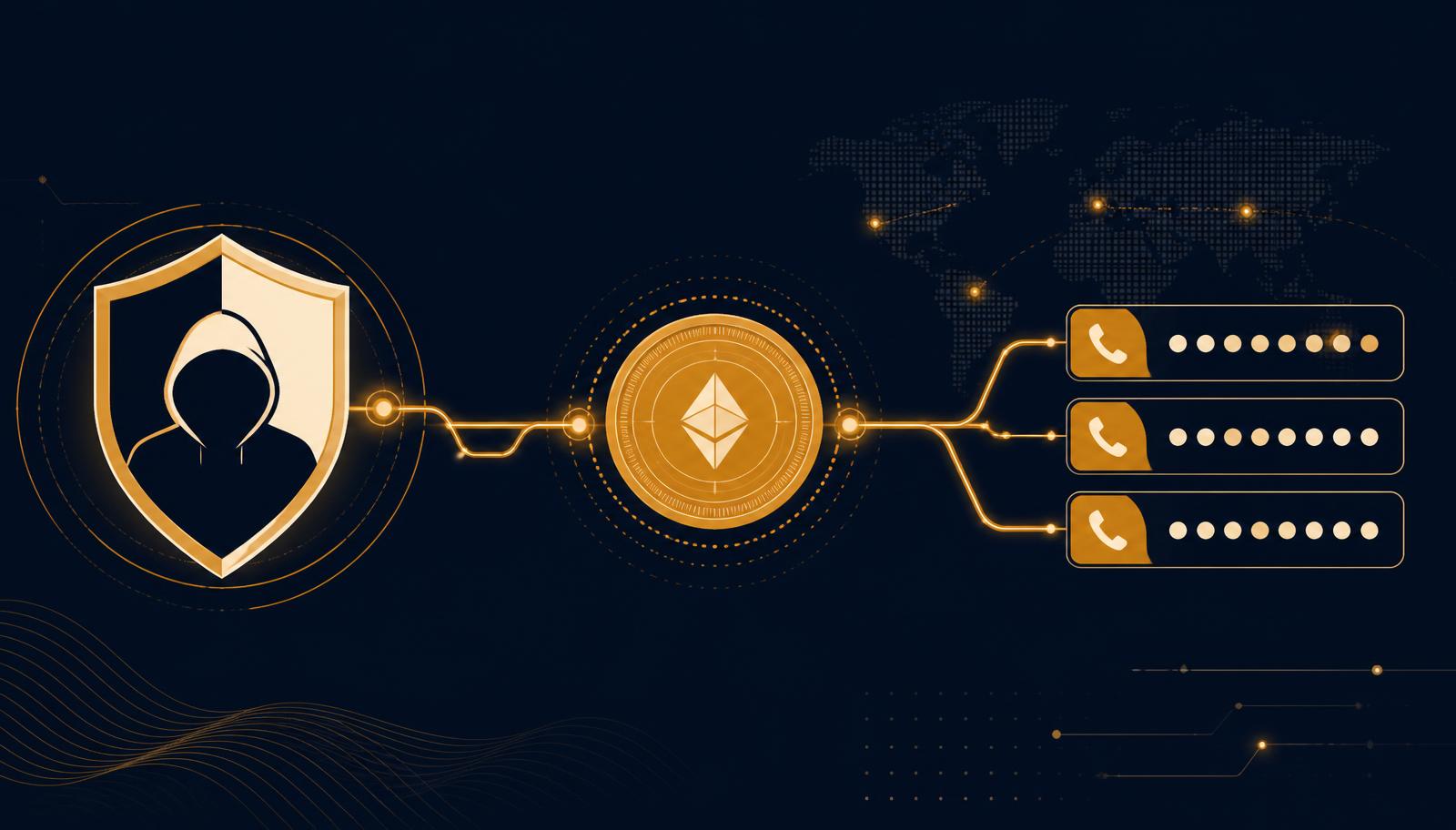
Short answer: a no-KYC VoIP provider lets you open an account, fund it, and start terminating calls or receiving numbers without uploading a passport, a utility bill, or company registration documents. At VoxioTelecom you sign up with an email address, top up in crypto, and your SIP trunk credentials are generated instantly — usually inside five minutes. What no-KYC does not mean is unlawful: traffic is still monitored for fraud, and our Acceptable Use Policy applies to every account.
KYC ("know your customer") is the identity-verification process banks and most telecom carriers apply before they let you buy service. In wholesale voice it usually looks like this: a sales form, a call with an account manager, scanned ID, proof of address, a company registration extract, sometimes a bank reference — then a few days of waiting while someone reviews it.
A no-KYC VoIP provider removes that gate. Concretely, with VoxioTelecom:
What still exists, and always will:
That combination is the honest definition of no-KYC in telecom: frictionless onboarding, not anonymity from the law. Any provider promising you more than that is either lying to you or planning to disappear with your deposit.
Traditional carriers KYC you for three reasons: postpaid credit risk, regulatory obligations tied to number assignment, and interconnect agreements that push liability down the chain.
Our model removes the first reason entirely. Every VoxioTelecom account is prepaid. There is no invoice to chase, no credit exposure, no 30-day payment terms. If your balance is zero, calls stop. That single design decision is what makes instant onboarding safe for us — and it is why we can skip the paperwork that a postpaid carrier cannot.
The second reason still applies in one narrow place: certain DID numbers in certain countries are regulated by the local telecom authority, and those regulators — not us — require an address or business record before a number can be assigned. We are explicit about which countries those are on each country page, so you never discover it after you have paid.
The whole flow is self-service. There is no human in the loop unless you open a ticket.
The typical time from landing on the site to a connected test call is under five minutes, and the only thing that can slow it down is blockchain confirmation time.
Crypto is not a gimmick here — it is what makes the no-KYC model work end to end. A card payment drags a bank's identity requirements into your telecom account through the back door. A stablecoin transfer does not.
| Asset | Network | Typical credit time | Notes |
|---|---|---|---|
| USDT | TRC-20 (Tron) | 1–3 min | Lowest fees, most used by our customers |
| USDT | BEP-20 (BSC) | 1–3 min | Good alternative when Tron fees spike |
| BTC | Bitcoin | 10–40 min | Credited after network confirmation |
| LTC | Litecoin | 3–10 min | Fast and cheap |
| SOL | Solana | under 1 min | Fastest settlement |
Deposits are matched to your account automatically and reconciled continuously, so a confirmed payment that has not shown up in your balance is a bug we fix, not a support argument you have to win. If a deposit ever lands short or late, the reconciliation job still credits it.
Auto top-up is available too: set a threshold and your balance is replenished before it hits zero, which matters if you run predictive dialing overnight and cannot afford a mid-campaign stop.
| VoxioTelecom | Traditional wholesale carrier | |
|---|---|---|
| Documents required | None for the account | ID, proof of address, company docs |
| Time to first call | Minutes | 2–10 business days |
| Payment | Prepaid crypto | Postpaid, bank transfer, deposit + credit check |
| Minimum commitment | None | Monthly minimum or committed volume |
| Rate visibility | Full rate deck in the portal | Rate sheet after NDA and a sales call |
| Trunk provisioning | Self-service, instant | Ticket to the NOC |
| Premium CLI routes | Explicitly labelled | "Ask your account manager" |
| Test traffic | Any amount, per-second billed | Often gated behind an agreement |
This is where most no-KYC providers fall apart. Skipping the paperwork is easy; delivering calls with the caller ID intact is not. Cheap grey routes strip or rewrite the CLI, drop after a few seconds, or terminate through so many hops that PDD climbs past four seconds and answer rates collapse.
We split the network explicitly, and we say which is which:
On top of that you control the caller ID from the portal per trunk: pass-through (send whatever your PBX sends), fixed (force one number), or hidden. A no-KYC account gets the same routing controls as any other account — see the caller ID guide for how each mode behaves downstream. If you want the deeper comparison, read Premium CLI vs standard routes.
Inbound is where "no-KYC" gets genuinely nuanced, and honesty beats marketing.
Some countries let a number be assigned with no end-user documentation at all. Others — Germany and several EU markets among them — have regulators that require a local address on file for geographic numbers, no matter which provider you buy from. National, mobile and toll-free ranges often have looser rules than geographic city numbers in exactly the same country.
Our catalogue covers 30+ countries with per-country pages listing prefixes, monthly price, setup fee, channel capacity and any documentation the regulator actually requires. Useful starting points:
DIDs are paid from the same prepaid crypto balance, so inbound and outbound live in one account.
A no-KYC provider that enforces nothing does not stay connected for long — its upstreams cut it off, and its customers lose their routes overnight. Our position is deliberately boring:
Read the full Acceptable Use Policy before you send volume. It is short and written in plain English.
The customers who benefit most from no-KYC onboarding are not the ones the phrase makes people imagine. In practice they are:
Is a no-KYC VoIP provider legal? Yes. There is no general legal requirement for a wholesale voice provider to collect identity documents from a prepaid customer. Specific obligations attach to specific number ranges in specific countries, and we apply those where they exist. Your own use of the service must still comply with the law where you operate.
Can I really get a SIP trunk without any documents? Yes. Account creation requires an email address only. Trunk credentials are generated in the portal immediately after you top up.
How do I pay for a SIP trunk with USDT? Open the funds page in the portal, choose USDT on TRC-20 or BEP-20, and send the amount to the generated address. The balance credits automatically once the network confirms, usually within a few minutes.
Do you accept Bitcoin? Yes — BTC, plus USDT, LTC, SOL and other major assets. Bitcoin takes longer to confirm than stablecoins, so for fast top-ups USDT TRC-20 is the usual choice.
Can I get a DID number without documents? In many countries, yes. In some, the local regulator requires an address for geographic numbers regardless of provider. Every country page states the requirement before you order, so there are no surprises after payment.
Are the calls anonymous? No, and be sceptical of anyone who says otherwise. Onboarding is document-free, but CDRs exist and SIP traffic carries signalling data. No-KYC is about frictionless access, not untraceability.
Will my caller ID be delivered? On premium CLI routes, yes — that is what they are for. On standard routes CLI delivery is best-effort. Each destination is labelled, and you choose per call which to use via tech-prefix routing.
What happens if I run out of balance mid-call? Calls in progress are cut when the balance is exhausted, which is why auto top-up exists. You can also set a low-balance alert.
Is there a minimum deposit or contract? No contract and no monthly minimum. Deposit what you want to test with, spend it per second, and top up when you need more.
No forms to fax, no account manager to schedule, no waiting on a compliance review. Create an account, top up in crypto, and place a test call today — or read how the crypto SIP trunk flow works end to end first.
Create an account to browse the full A-Z deck in your portal — Premium CLI and Standard clearly labelled, searchable by prefix or destination.